You’ve probably heard the term ‘modular home,’ but what does it actually involve? Does it come on wheels? Is it a ‘real’ house? The vocabulary can feel intimidating, but the concepts behind it are surprisingly straightforward and the answer to that last question is a resounding yes.
In practice, these common modular home terms are simply a map to a faster, more predictable building process—one that avoids many of the weather delays and site variables of traditional construction. This guide demystifies crucial steps like the “set day,” the “finishing” phase, and even how financing works, turning confusion into confidence. By the end, you’ll have a clear framework for understanding the modular home build cycle and feel ready to take the next step.
What is a Modular Home? (And How It’s Different From a Mobile Home)
You’ve likely heard the term ‘modular home,’ but it’s often confused with other types of housing. A modular home is not a mobile home. From the moment it’s finished, it is legally and financially indistinguishable from a home built entirely on-site.
The key difference between modular vs. site-built home construction is simply where the majority of work happens. A traditional site-built home is constructed piece by piece on your property, exposed to weather and potential delays. In contrast, a modular home is a type of prefabricated home construction where the structure is built in climate-controlled sections, called modules, inside a factory.
This factory process doesn’t mean corners are cut. On the contrary, every modular home must be built to the exact same strict state and local building codes required for any site-built house in your neighborhood. An inspector even certifies the work inside the factory, ensuring it meets or exceeds all safety and quality standards before the modules are ever transported.
This is what separates a modular home from a manufactured (or mobile) home, which is built to a different federal standard known as the HUD code. Because a modular home is permanently secured to a foundation on your land, it is considered “real property” whereby it appreciates in value and gets financed just like any other traditionally built home.
The First Steps: Your Foundation and Site Preparation
So, what happens on your land while the house is being built miles away? This is where the modular process reveals its biggest advantage: speed. Instead of waiting for one step to finish before starting the next, construction happens on two tracks at once. This parallel process, completing all the site work while the factory builds your home, is what can shave months off a traditional construction timeline.
A common question we hear is about the types of foundations for modular homes. The great news is that you have the same strong, reliable options as any site-built home. Your foundation is custom-engineered for your land and specific home design, allowing you to choose what best fits your family’s needs and budget:
- A full basement for extra living or storage space
- A crawl space, common in many regions
- A slab-on-grade foundation
The on-site completion of a modular home involves more than just digging a hole. A comprehensive modular home site preparation checklist guides everything from soil testing and land grading to running utility lines for water and electricity. This meticulous planning ensures that when your finished home arrives, the site is perfectly ready for the main event.
What is “Set Day”? The Most Exciting Day of Your Build
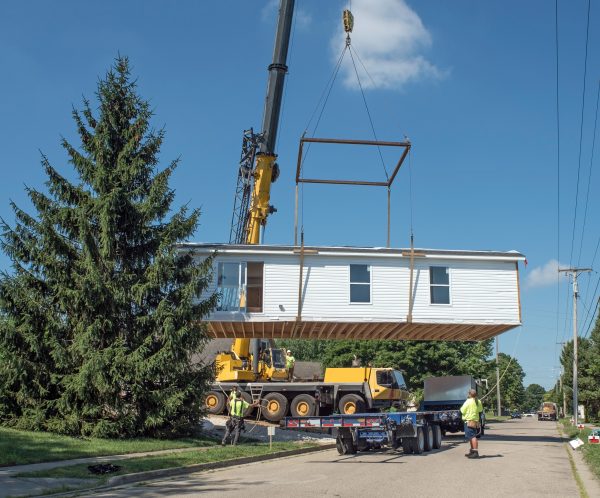
After weeks of parallel progress at the factory and on your land, the day arrives that transforms your empty foundation into a recognizable house. This is “Set Day,” the most visually stunning part of the modular home setting process. On this day, the individual sections of your home, called modules, are delivered to your site. Think of them as massive, precision-built building blocks, each containing the walls, flooring, and even pre-installed windows and fixtures that will soon become your kitchen, bedrooms, and living spaces.
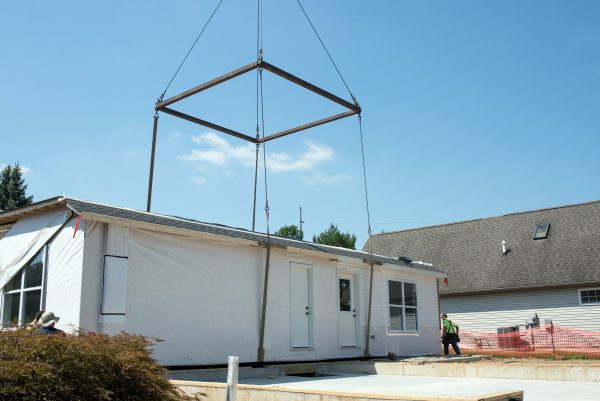
Bringing these huge modules together requires a unique team. The responsibilities of a modular home set crew are specialized; they are highly trained experts whose entire job focuses on the intricate process of crane setting a modular home. Guided by the crew, a large crane carefully lifts each module and flies it through the air, gently placing it onto the foundation with incredible accuracy. Their expertise is crucial for ensuring every piece aligns perfectly, creating a structurally sound and seamless home.
The result of this carefully coordinated effort is nothing short of amazing. What was an empty foundation in the morning becomes a weatherproof structure with walls, floors, and a roof by the afternoon. In just a single day, the main modular home delivery and installation is complete. While it looks like a house, it’s not quite ready to live in. The structure is now secure and prepared for the next critical step: the finishing work that will truly make it your home.
From House to Home: The “Finishing” and “Button-Up” Process
Once the crane leaves, your house is secure and weatherproof, but the interior sections need to be seamlessly connected. This next phase is known as the “finishing” or “button-up” process. It’s where skilled crews transform the separate, factory-built modules into a single, cohesive living space, ensuring the on-site completion of a modular home is flawless. Think of it as the detailed work that turns a well-built structure into a comfortable, finished home.
So, what is included in modular home finishing? This critical work involves connecting the plumbing, electrical, and HVAC systems that run between modules. Crews will then expertly finish the drywall at the seams, install any flooring that crosses between sections, and complete the exterior siding and roofing to create a unified, polished look. Every detail is addressed to make the places where modules join, sometimes called mating lines, completely disappear.
Managing these different trades can sound like a huge headache, which is why many buyers opt for a “turnkey” service. But what does turnkey modular home mean for you? It simply means InfinityBilt Homes acts as the general contractor, coordinating every aspect of the finishing process. From the plumber to the electrician, we handle it all, with the goal of handing you the keys to a home that is 100% move-in ready.
Ultimately, this button-up stage is what ensures your home is not only beautiful but also functions perfectly as a solid, singular structure. With the physical journey from factory floor to finished home now clear, a new question often arises: how do you manage the financial side of a project that happens in two places at once?
How Do You Pay for It? Making Sense of Modular Home Financing
Paying for a home that’s built in a factory while its foundation is prepared elsewhere might seem complex, but lenders have a well-established, two-step path for it. This approach is designed specifically for how to get financing for a modular home, providing the funds needed for each stage of the project without the guesswork. It’s a process that separates the building phase from the long-term ownership, making it clear and manageable.
The first phase involves a prefabricated home construction loan. Think of this as a short-term “project fund” managed by your lender. This loan covers the cost of manufacturing the modules at the factory and pays for the on-site work, such as pouring the foundation, connecting utilities, and finishing the home. Payments are typically released at key milestones, ensuring the project keeps moving forward smoothly until the day you get your keys.
Once your home is completely finished and has passed its final inspections, the process becomes much more familiar. The construction loan is paid off and rolled into a standard mortgage conversion. This is the same kind of conventional, long-term home loan you would get for any site-built house. Because modular homes are built to the same local codes and appraised just like their neighbors, you secure your investment with a predictable monthly payment, confident in your home’s lasting value.
The InfinityBilt Homes Process: Your Guide from Foundation to Finish
Understanding the financial side is one thing, but who coordinates the factory, foundation crew, and final finishers? The InfinityBilt Homes building process provides your most valuable resource: a dedicated Project Manager. We become your personal guide, ensuring factory production and on-site work align perfectly. We manage the complex logistics of modular home project management so you don’t have to, turning a potentially overwhelming process into a clear, step-by-step journey.
Leading the way as your Project Manager also demystifies the financing. We connect you with lenders who specialize in modular construction loans, simplifying the two-step process. While your home is being precisely built in the factory, InfinityBilt Homes is already coordinating the set crew, utility connections, and finishing teams for a seamless arrival on your property, ensuring no detail is overlooked.
This comprehensive service defines our turnkey modular home experience. We take full responsibility for delivering your completed home on a predictable timeline and budget. Instead of you juggling multiple contractors, you have one trusted partner from start to finish, giving you a clear and stress-free path to getting your keys.
You’re Now Ready to Talk Modular Homes with Confidence
With a new understanding of terms like “setting,” “finishing,” and “set crew,” you can see them as clear steps in a predictable and efficient building process. You have the vocabulary to confidently explore the world of modular homes, separating modern quality from old myths and understanding the complete modular home build cycle.
This knowledge reveals the core benefits of modular homes: a process that delivers higher quality and a more reliable timeline. Your journey doesn’t have to end here. Take the simple next step by exploring home designs to spark your imagination, or contact InfinityBilt Homes to have a friendly expert answer your specific questions.